
Understanding The Factors That Affect Corporate Bond Prices
Imagine you're a business owner who's just wrapped up a big project and now has some extra cash sitting in the bank. You decide to invest in corporate bonds issued by a solid manufacturing company, expecting steady payments over time. But a few months later, you notice the price of that bond has shifted, even though the company seems to be doing fine. What caused that change? This is where grasping corporate bond prices becomes key for investors like you.
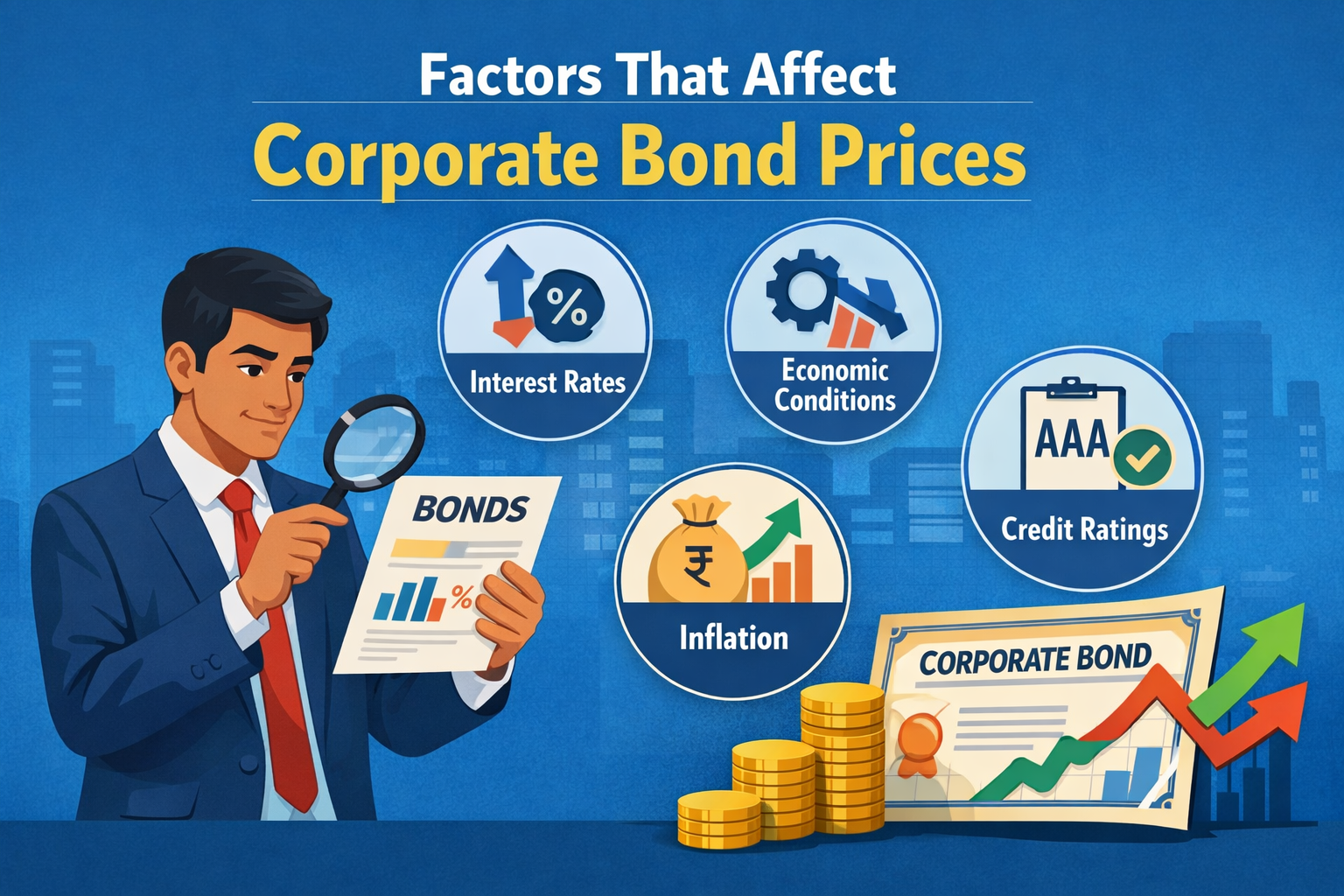
Corporate bonds are debt securities issued by companies to raise funds. When you buy one, you're lending the company money. In return, it promises to pay you a coupon rate (the interest rate on the bond) and to return the face value (the original amount) on the maturity date, when the bond ends. Factors like corporate bonds and interest rates play a big role in how these bond prices move day to day in the market.
Interest Rates
Interest rates refer to the cost of borrowing money, set by central banks and influenced by economic policy. They directly impact bond yields, the return investors demand.
Here's how it works in practice:
- Rate rises: Existing corporate bond prices fall. New bonds look better with higher rates, so older ones trade at a discount to reflect their lower yields.
- Rate drops: Prices go up. Your bond's fixed coupon becomes more attractive than that of new, lower-rate issues.
- Company angle: A tech firm with bonds outstanding might see its prices dip if rates climb, prompting it to refinance later at higher costs.
|
Scenario |
Interest Rate Change |
Effect on Bond Prices |
|
Energy company expands amid rising rates |
Increases |
Prices drop as investors seek higher yields elsewhere |
|
Utility firm with stable bonds during rate cuts |
Decreases |
Prices rise, rewarding early holders |
Bond prices and interest rates move in opposite directions; it's a core rule. Watching central bank announcements helps you time buys on Bondbazaar, where you can snag deals from a wide selection of over 10,000 bonds across categories, all with real-time trading. Keep an eye on rate trends; they set the rhythm for your portfolio's value.
Credit Quality
Credit quality measures a company's ability to repay its debts, as rated by agencies such as CRISIL, ICRA, CARE Ratings, and India Ratings. On a scale from investment-grade (strong) to speculative-grade (riskier).
Key pointers for investors:
- AAA generally indicates very strong repayment ability and lower credit risk (not risk-free).
- Downgrades signal trouble, pushing prices down as yields rise to attract buyers.
- Upgrades boost prices, as seen with a healthcare provider improving operations.
|
Rating Shift |
Example Company Scenario |
Price Impact |
|
Upgrade for an efficient manufacturer |
Better profits, lower debt |
Prices climb |
|
Downgrade for over-expanded retailer |
Rising costs, cash crunch |
Prices fall |
Investment-grade bonds offer reliability, while other bonds offer higher yields for those comfortable with added monitoring. Bondbazaar, led by bond-market experts and partnered with Trust Group, lets you easily filter by ratings.
Credit quality shapes the safety and price of your bond holdings; review ratings regularly.
Time to Maturity
Time to maturity is the period until the bond's face value is repaid, ranging from months to decades, and it affects sensitivity to other factors.
- Short-term bonds: Less price swing, quicker return of principal.
- Long-term bonds: More volatile, as distant payments face greater uncertainty.
- Scenario: An auto parts supplier's 10-year bond dips more than its 2-year one during rate hikes.
|
Bond Length |
Company Example |
Price Behavior |
|
Short (under 5 years) |
Fast-growing software firm |
Stable prices |
|
Long (over 10 years) |
Infrastructure developer |
Bigger swings |
Longer maturities usually have higher duration, so small yield changes can cause bigger price moves. On Bondbazaar, a SEBI-regulated, zero-charge platform, you can buy or sell these anytime, with bonds in demat form and payments made straight to your account. Match your timeline to maturity for smoother investing.
Must Read - Short-Term vs. Long-Term Bonds
Economic Conditions
Economic conditions, including growth rates, inflation, and employment levels, influence company health and investor sentiment.
Pointers to track:
- Strong growth lifts prices across solid companies.
- Slowdowns put pressure on prices, especially in cyclical sectors like manufacturing.
- Higher inflation expectations can push yields up, which may reduce bond prices
|
Economic Phase |
Affected Sector |
Bond Price Trend |
|
Boom times |
Consumer goods producer |
Prices hold firm or rise |
|
Slow growth |
Heavy industry player |
Mild pressure on prices |
These tides lift or test all bonds. Bondbazaar's real-time platform and physical support team help you navigate picks confidently. Ultimately, economic health sets the stage; stay informed for smart moves.
Must Read - What is an OBPP (Online Bond Platform Provider)?
Supply and Demand
Supply and demand in bonds are driven by issuance volume and investor appetite, which directly set market prices.
Simple dynamics:
-
High demand (e.g., safe-haven seeking) pushes prices up.
-
Oversupply from many issuers softens prices.
-
Scenario: High-rated NBFC bonds or PSU bonds may see higher demand when investors prefer safety.
|
Market Force |
Scenario |
Result |
|
Surging demand |
Stable bank issuer |
Higher prices |
|
Heavy supply |
Multiple energy firms issuing |
Softer prices |
Demand often ties back to rates and credit. Bondbazaar's vast selection makes comparison easy.
Conclusion
Corporate bond prices dance to the tune of interest rates, credit quality, maturity timelines, economic tides, and supply and demand. As an investor, tuning into these factors empowers you to make sharp choices and secure steady returns from reliable companies. Bondbazaar simplifies the process with expert tools and seamless trading.
Explore Bondbazaar today, earn fixed returns of 8-14%, buy or sell bonds with one click, all on a zero-charge, expert-led platform.
Start building your portfolio now!
FAQs
-
How do rising interest rates affect my existing corporate bonds?
Rising interest rates lower prices for existing corporate bonds, as new bonds offer higher yields, making yours less competitive until maturity.
-
What role does a company's credit rating play in bond prices?
Higher ratings signal lower risk, supporting stronger prices; lower ones increase yields to draw investors.
-
Why do long-term bonds fluctuate more than short-term ones?
Long-term bonds face greater uncertainty over time, amplifying the impacts of interest rates and economic shifts.
-
Can inflation hurt corporate bond prices?
Yes, it reduces the real value of fixed payments, often leading to downward price adjustments.
-
How does economic growth influence bond prices?
Strong growth supports the company's financial health, typically driving up prices for high-quality issuers.