
What Is the Relationship Between Bond Prices and Interest Rates?
In every investor’s journey, there comes a time when stability and predictable returns start looking more appealing than high-risk adventures. That’s when bonds become a natural consideration.
Bonds are fixed-income instruments that represent a loan made by an investor to a borrower, usually a government or corporation. They include terms such as face value (the amount repaid at maturity), coupon rate (the interest paid annually or semi-annually), and maturity date (the end of the bond’s tenure).
However, one question continues to fascinate many investors: what is the relationship between bond prices and interest rates? Understanding this relationship helps investors determine when to buy bonds and how to adjust their investment strategies in response to changing interest rate conditions.
Key Highlights
-
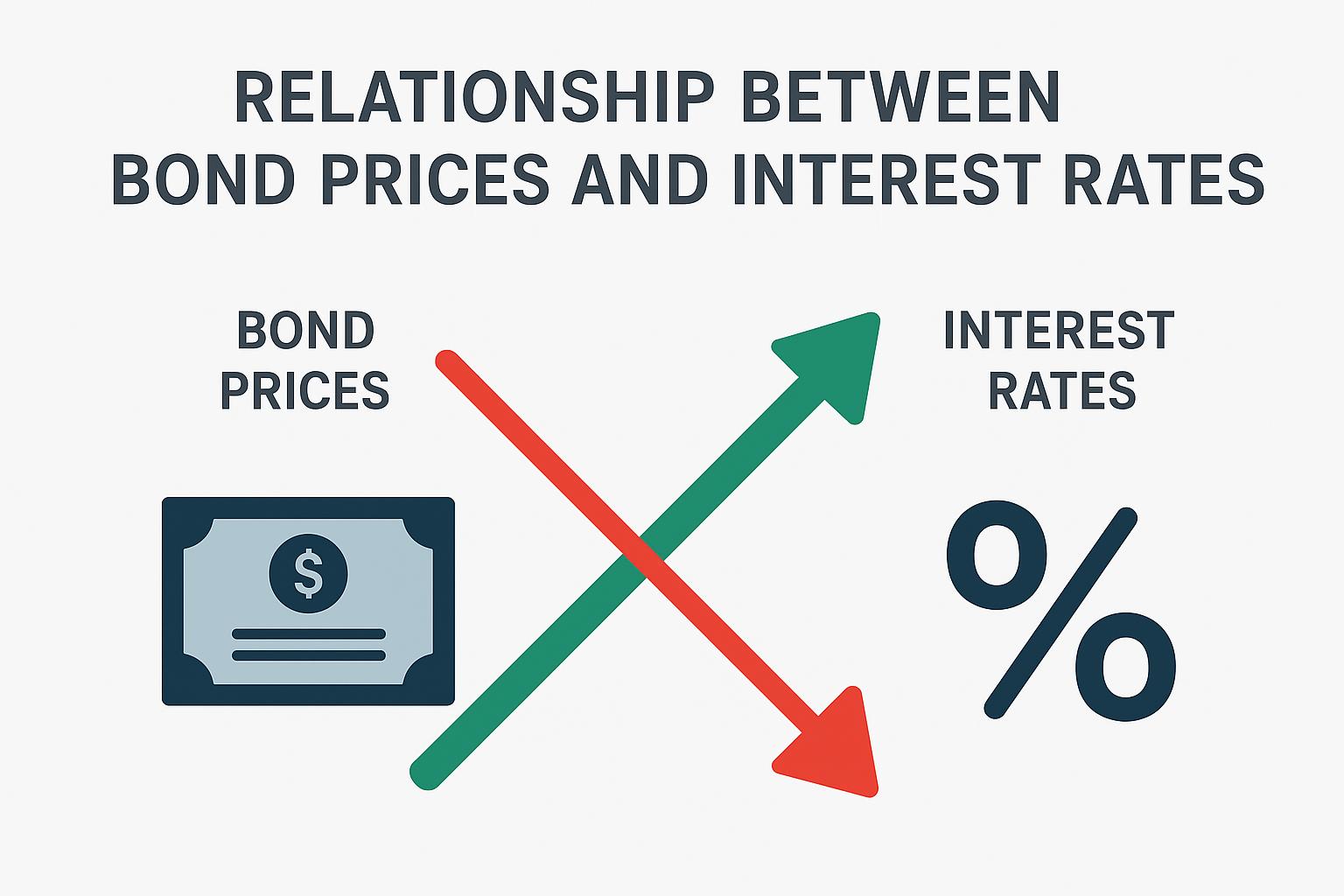
Bond prices and interest rates move in opposite directions.
-
Rising interest rates reduce existing bond prices; falling rates increase them.
-
Long-term bonds are more sensitive to rate changes than short-term ones.
-
Understanding this relationship helps you decide when to buy, hold, or sell bonds.
Understanding the Core Connection
The link between bond prices and interest rates works much like a seesaw: when one side rises, the other tends to fall. This behaviour is not random; it’s a result of how fixed-income instruments function over time.
Suppose you already hold a bond that pays a fixed interest (coupon) rate. If new bonds enter the market offering higher interest, investors would prefer those. As a result, your bond’s resale price may decline slightly to remain attractive, and vice versa if rates fall.
This inverse link forms the foundation of the bond price and interest rate relationship, enabling investors to anticipate how market changes may influence their portfolio value.
Example:
Imagine you bought a ₹1,000 bond offering 8% annual interest.
If new bonds now offer 10%, your 8% bond becomes less appealing. You might need to sell it for ₹950 so its effective yield equals 10%.
On the other hand, if new bonds only offer 6%, your 8% bond becomes more valuable — you could sell it at a premium.
Why Interest Rate Movements Impact Bond Prices?
Interest rates are not random; they reflect the broader economic outlook set by central banks and financial policies. When rates rise, borrowing costs for businesses and governments increase. New bonds issued under such conditions offer higher yields to attract investors.
For existing holders, their older bonds, issued at lower coupon rates, may appear less profitable compared to newer ones. This leads to a fall in their market price if they wish to sell before maturity.
Conversely, when interest rates drop, those older bonds with comparatively higher coupon rates become more desirable, pushing their market price upward.
Think of two bonds, one old, one new. The old bond pays a fixed interest of a certain percentage, but new bonds now offer slightly better rates. To remain appealing in the resale market, the price of the old bond adjusts downward so that its effective yield aligns with that of newly issued ones.
This constant adjustment ensures fairness among investors and maintains market efficiency.
Long-Term vs Short-Term Bonds
Not all bonds respond equally to changes in interest rates. The level of impact depends largely on duration, the period remaining until the bond matures.
Overview Table:
|
Bond Type |
Sensitivity to Rate Change |
Price Impact |
|
Short-term Bonds |
Lower |
Smaller price movements |
|
Long-term Bonds |
Higher |
Larger price movements |
Longer-term bonds lock in fixed interest over many years. Therefore, even a slight shift in market rates significantly impacts their perceived value. Short-term bonds, with quicker maturities, experience smaller price swings because the investor can reinvest sooner at updated rates.
For those who prefer steady returns with less risk exposure, short-term bonds can be more comfortable choices. However, investors seeking higher yields may consider long-term bonds, keeping in mind their potential for price fluctuations.
Also Read - When to Buy Short-Term and Long-Term Bonds
Timing and Strategy: Knowing When to Buy Bonds
While timing the market perfectly is near impossible, understanding how bonds and interest rates interact helps investors make informed choices.
When interest rates are expected to fall, bond prices rise, making it favourable to buy bonds early to benefit from price appreciation. On the other hand, when rates might climb, waiting for new issues offering better coupons could make more sense.
Yet, even in rising interest environments, bonds remain sound instruments—because holding till maturity ensures you receive fixed returns regardless of interim price movements.
At Bondbazaar, investors can seamlessly explore thousands of Government Securities (G-Secs), Corporate Bonds, and other fixed-income products, all with zero charges for account setup or maintenance. It is a SEBI-regulated platform where one can buy or sell bonds effortlessly using a real-time trading interface.
Highlights for Investors:
-
Earn 8–14% fixed returns.
-
Over 10,000+ bond options across categories.
-
No brokerage or hidden fees.
Bondbazaar ensures every transaction is secure, with bonds safely held in your demat account and returns credited directly.
Benefits of Grasping the Relationship
Understanding the relationship between bond prices and interest rates is not about predicting the future; it’s about preparation. It helps investors:
-
Evaluate whether to hold or sell an existing bond.
-
Identify entry points for buying bonds with optimal yields.
-
Balance risk and reward across varying bond durations.
-
Diversify their portfolio with confidence regardless of interest rate shifts.
This clarity is invaluable for both newcomers exploring bonds for the first time and experienced investors seeking stability. It ensures that investment decisions are made strategically, rather than emotionally.
Conclusion
The relationship between bond prices and interest rates determines how bonds behave in various economic environments. Interest rate movements influence bond demand and value, shaping when and how investors choose to participate in the market. Whether you seek short-term flexibility or long-term fixed income, understanding this fundamental relationship helps you align your decisions with market realities.
For a secure, real-time, and transparent way to buy or sell bonds, visit Bondbazaar, your trusted platform for fixed-income investments that deliver dependable returns.
FAQs
1. Why do bond prices fall when interest rates rise?
When market interest rates increase, new bonds offer higher coupon payments. Existing bonds with lower rates become less attractive, causing their prices to adjust downward to stay competitive.
2. Do all types of bonds react equally to interest rate changes?
No. Long-term bonds experience larger price swings as they lock in rates for a longer period. Short-term bonds are less affected since they mature quickly and can be reinvested sooner.
3. What happens if I hold my bond till maturity?
If you hold the bond till maturity, you receive the full face value and all scheduled coupon payments, regardless of interim price fluctuations in the market.
4. How can small investors buy bonds easily?
Bondbazaar allows investors to buy and sell bonds digitally, without complex procedures or extra fees. Payments and returns are managed directly through your demat account.
5. Is now a good time to buy bonds?
It depends on your financial goals and interest rate expectations. If you aim for a steady income and prefer stability, bonds can fit well, especially when purchased at competitive rates.
6. How do rising interest rates affect long-term investors?
Rising rates may temporarily reduce market value, but long-term investors who hold till maturity still receive all coupons and face value. It can also open opportunities to buy new bonds at better yields.