
Treasury Bills Vs Bonds: Which Is Right for Your Investment Strategy?
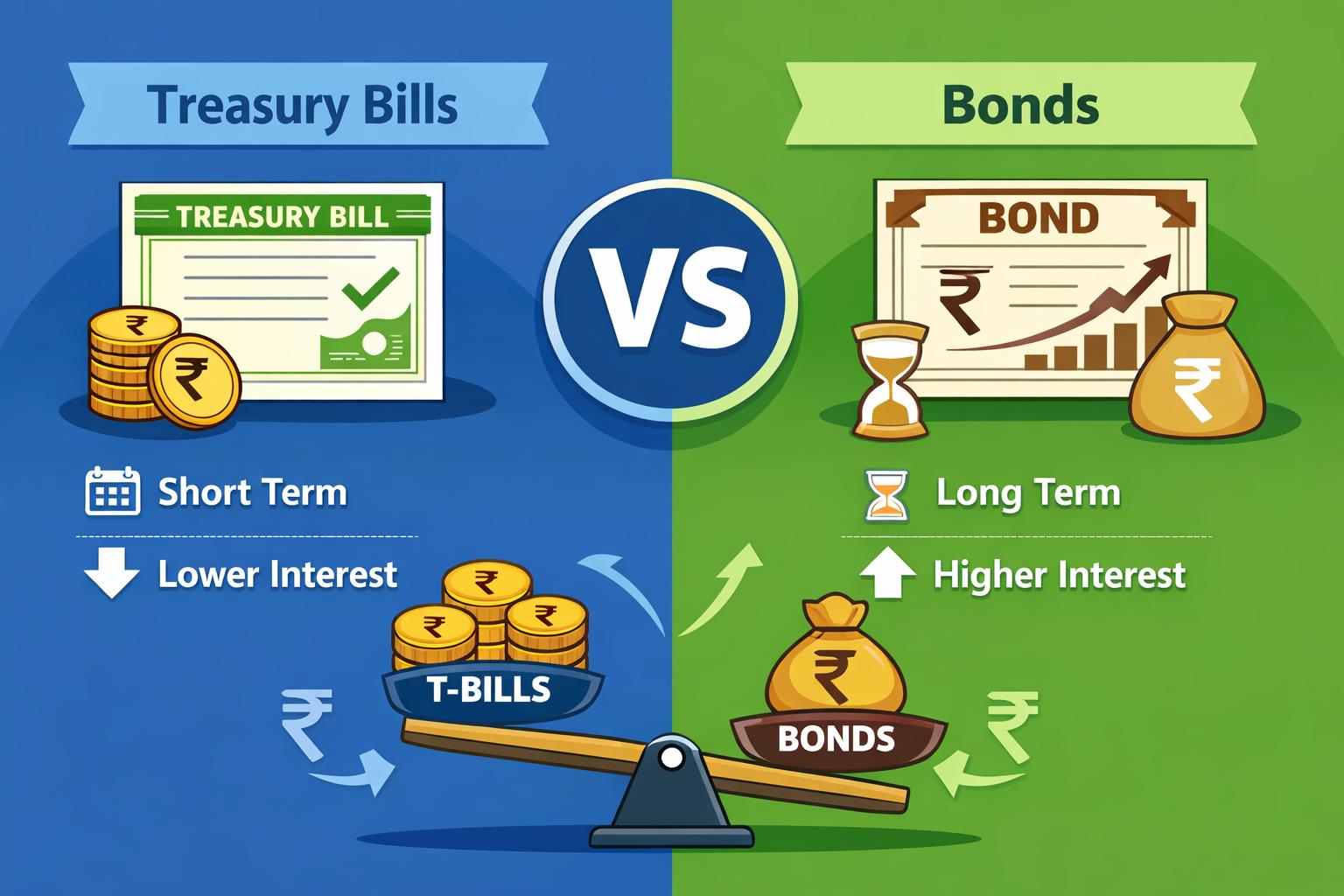
Treasury bills and bonds are both essential government-issued financial instruments that help fund public projects and provide investment opportunities for individuals. When a government or company needs to raise money, it issues these securities, promising to repay investors over time. Think of it as a business managing its cash flow: treasury bills act like short-term working capital loans, while bonds resemble long-term investments in growth projects.
Think of it like business finance:
- T-bills = short-term working capital support
- Bonds = long-term capital for growth projects
Understanding these differences helps investors choose investments that align with their financial timeline and income goals.
What Are Treasury Bills?
Treasury bills are similar to short-term financing a business uses to bridge immediate needs, like managing payroll or covering unexpected expenses. They are government-issued debt securities that mature in a year or less. Unlike bonds, T-bills don’t pay interest during their term. Instead, they are sold at a price lower than their face value, and investors receive the full face value at maturity. The difference between the purchase price and the maturity value is the investor’s earnings. This short maturity offers high liquidity and minimal risk, making T-bills appealing for investors who prioritise capital preservation and timely access to funds.
- Issued for short periods, usually from a few weeks up to one year
- Sold at a discount; returns realised at maturity with full face value repayment
- Suitable for conservative investors needing liquidity and safety
- Used by governments to cover immediate budgetary needs
What Are Government Bonds?
Consider bonds as a company seeking long-term capital to expand operations or launch new product lines. Treasury bonds are long-term government securities typically maturing in 10 to 30 years. Bonds provide fixed interest payments semi-annually, creating a steady income stream for investors. Because bonds lock in investment for longer periods, they may be affected by interest rate fluctuations, which can affect market prices. However, they usually offer higher returns than T-bills to compensate for the longer commitment. Bonds suit investors looking for predictable income and willing to hold their investment for extended periods.
- Long-term debt instruments with maturity usually spanning 10 to 30 years
- Pay fixed interest (coupon) payments twice a year
- Appropriate for investors seeking regular income over the long run
- Used by governments for financing projects with extended timelines
Comparing Treasury Bills and Bonds
Selecting the right instrument requires understanding its fundamental differences in maturity, return, and income structure.
|
Feature |
Treasury Bills |
Treasury Bonds |
|
Maturity |
Less than 1 year |
10 to 30 years |
|
Interest Payment |
No periodic interest; sold at discount |
Fixed semi-annual interest payments |
|
Return Profile |
Lower returns due to short duration |
Higher returns with longer commitment |
|
Liquidity |
Highly liquid, easy to trade |
Less liquid, affected by market rates |
|
Suitability |
Short-term investment, capital preservation |
Long-term income-oriented investment |
Making the Right Choice
When deciding between treasury bills vs bonds, think of your investment like a business cash flow plan. If you need money available soon or value flexibility, T-bills are like short-term credit, managing immediate financial demands. If you aim for a steady income over the years and can commit funds for longer, bonds offer fixed returns that support long-term financial planning. Both play a role in a balanced portfolio, providing safety backed by a government guarantee while catering to different time horizons and income needs.
- T-bills fit investors seeking low risk and quick access
- Bonds cater to those preferring stable, periodic returns over time
- Each instrument diversifies a portfolio’s risk and return profile
- Consider personal financial goals and market conditions when investing
Buying and Selling Bonds Easily
Thanks to Bondbazaar, investing in bonds has become accessible and simple. Bondbazaar offers a wide variety of bonds, including government securities and corporate bonds, with over 10,000 options on its real-time trading platform. There are no account-opening fees, brokerage fees, or maintenance charges, making bond buying and selling easy and cost-effective. Bonds purchased through Bondbazaar are held in demat form, with interest payments and principal credited directly to investors’ accounts, ensuring transparency and convenience.
- Access a broad selection of bonds from government and corporate issuers
- Instant buying and selling with zero charges
- Secure demat holding with direct credit of interest and principal
- Guided by experts combining digital automation and personalised service
Conclusion
Understanding treasury bills vs bonds goes beyond simple definitions; it’s about aligning investments with financial goals and timelines. Treasury bills offer short-term safety and liquidity, making them suitable for managing immediate needs or parking funds temporarily. Bonds provide a longer-term fixed income, supporting steady cash flow for future expenses or growth. Both instruments support diversified portfolios, balancing risk with returns tailored to different investor preferences. With the ease of buying and selling bonds on Bondbazaar, investors can strategically build or adjust their fixed income holdings to meet their needs efficiently.
Ready to put your investments to work with fixed returns and easy access?
Explore Bondbazaar's wide bond selection today and take control of your financial future with confidence.
FAQs
1. What is the main difference between treasury bills and bonds?
T-bills mature within a year and don't pay interest periodically, while bonds have longer maturities and pay fixed interest regularly.
2. Are treasury bonds safer than treasury bills?
Both are government-backed and very safe, but T-bills have lower interest rate risk due to their short maturity.
3. Can I sell bonds before maturity?
Bonds can be sold in the secondary market, though their market price may fluctuate depending on interest rates.
4. How do I earn money from treasury bills?
You buy T-bills at a discount and receive the full face value at maturity, earning the difference as profit.
5. Why invest in bonds through Bondbazaar?
Bondbazaar offers a wide selection of bonds, zero charges, secure demat holdings, and a real-time platform for easy buying and selling.